From Memory · a sample correspondence
A dinner in Sarlat, brought back to the table.
Restaurant L'Adresse · Sarlat-la-Canéda · September 2025
What follows is the kind of exchange that begins when someone fills out the From Memory form.
A reader wrote to us about a dinner she and her husband ate in southwest France around 2005. She remembered a duck breast in a dark sauce, small potatoes that tasted like they'd been cooked in something rich, and a cathedral on the corner outside.
The customer and the occasion below are illustrative. The town, the restaurant, the dish, and every named ingredient and supplier are real and verified — and the photographs are from a research visit the chef made in September of last year.
Names have been changed. The dish has not.
From the customer
D. to Jack · Subject: A dinner in France, maybe twenty years ago
Hello — I'm trying to recreate something for my wife's birthday and I don't know where to start. We were in southern France in the fall, I want to say two thousand four or five, somewhere in the countryside east of Bordeaux. A small town, completely yellow stone, cobblestones, very old. We had dinner at a small place on a corner near a cathedral.
I had a duck breast — sliced, served in a glossy dark sauce that the waiter said had foie gras in it, with small crispy potatoes alongside that tasted like they'd been cooked in something rich. The potatoes alone I still think about. There were dollops of something white on the plate that I want to say was cheese but I'm not sure.
She had a salad with smoked duck and walnuts on it, and a little terrine of foie gras. We drank a dark red wine, almost black, that I remember being told was the local one and not something we'd find at home. We had a small round goat cheese after dinner, and strawberries for dessert with something balsamic on them.
I have looked at recipes online for "French duck breast" and none of them are this. The potatoes especially. Can you help?
D.
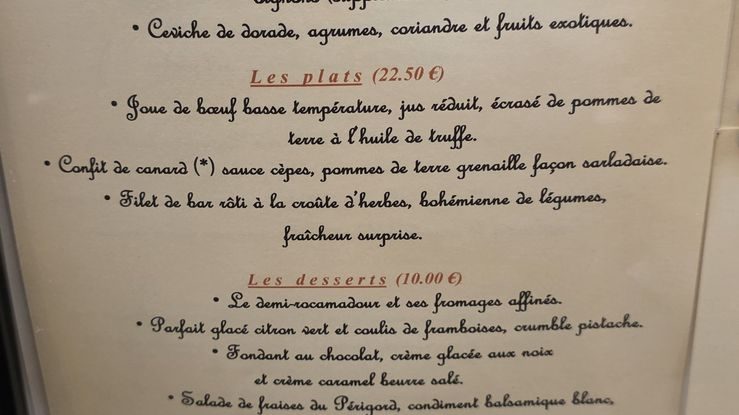
Sarlat-la-Canéda · Place de la Liberté · the medieval quarter
From Jack
In reply
Dear D.,
Thank you for writing. I know this dinner. I want to ask you one question before I commit to it, but most of what you described is unmistakable.
The town is almost certainly Sarlat-la-Canéda, in the Périgord Noir region — Périgord Noir meaning "Black Périgord," for the dark oak forests and the truffles that grow under them. It sits in the Dordogne, two hours east of Bordeaux, in a valley of medieval villages built entirely from the local honey-colored limestone. The cathedral on the corner you remember is the Cathédrale Saint-Sacerdos, twelfth century, the seat of the bishops of Sarlat until the diocese was dissolved. Every building in the old quarter is required by law to be roofed in the local lauze stone tile, which is why the town stays so consistently golden. You walked on cobblestones laid in the Middle Ages.
The dish you remember is the magret de canard, sauce foie gras, pommes de terre grenaille façon sarladaise. Let me name each piece, because the parts matter.
Magret is the breast of a fattened duck — specifically a duck that was raised for foie gras, so the breast is larger, redder, and richer than a regular duck breast. The protected designation IGP Canard à Foie Gras du Sud-Ouest governs it. It is scored on the fat side, cooked fat-side down in a dry pan until the fat renders out and the skin crisps, then turned for less than a minute on the meat side and rested. It is served pink in the middle — almost rare — and sliced against the grain. That is why what you remember is sliced, not whole.
The sauce foie gras is what makes the dish a Périgord dish and not a brasserie one. A reduction of duck stock and red wine — usually a local Bergerac or Cahors — finished off the heat with a knob of foie gras melted into it. The foie gras does not cook into the sauce; it enriches it just before serving. That is the glossy darkness you remember.
The potatoes are the heart of why this dish is unforgettable. Pommes de terre grenaille are small new potatoes, halved, skin on. Façon sarladaise means they were cooked in the way that is named for the town you were sitting in — sautéed slowly in rendered duck fat (not olive oil, not butter — duck fat, often saved from the very magret being served), tossed at the end with chopped garlic and parsley, finished with coarse salt. Sarlat is the dish's namesake. Cooking these potatoes in anything other than duck fat is a different recipe with the same name, and most American restaurants get this wrong.
The dollops of white on the plate were almost certainly fresh sheep's-milk brebis — used the way some Périgord kitchens contrast the richness of the duck and the potatoes with something cool, clean, and slightly sour. Not a sauce; a counterpoint.
Your wife's plate was the salade périgourdine — green salad, fresh tomato, slices of magret fumé (smoked duck breast), gésiers confits (preserved gizzards, sliced thin and warm), a small terrine de foie gras, and the legendary noix du Périgord — walnuts under their own IGP designation, considered the best walnut in France, with a sweetness the California walnut doesn't have.
The wine was almost certainly a Cahors — the vin noir, the black wine, made from malbec a hundred kilometers east of Sarlat. It is genuinely close to black in the glass. The goat cheese after dinner was a Rocamadour AOP, a small round disc from the cliff village of Rocamadour, fifty kilometers from where you were sitting. The dessert was the fraises du Périgord, the IGP-protected late-season strawberry, with a few drops of vinaigre balsamique blanc.
One question before I quote the work. You said "near a cathedral, on a corner." There are two restaurants in Sarlat that fit that description and serve exactly the menu you described — the dish is essentially identical at both, because this is regional cooking, not a chef's signature. But if you remember whether the room had wooden beams overhead or stone vaulting, I would like to know. It does not change the recipe, but I like to know which kitchen I am honoring.
One question and then I will quote you the work.
Jack
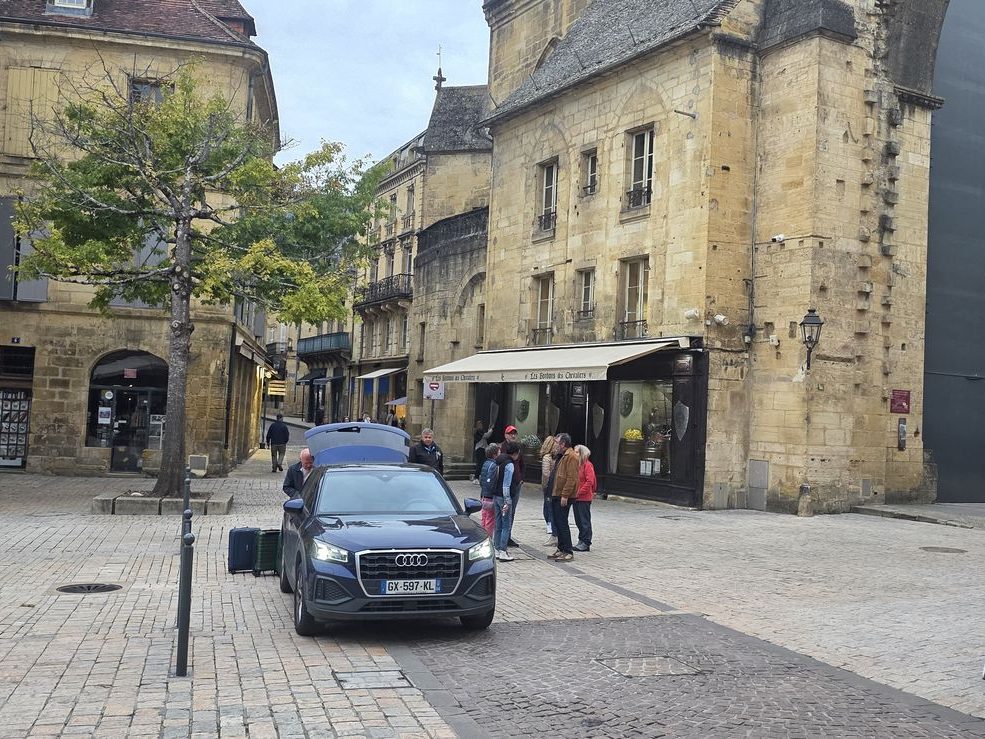
The Suggestions card at L'Adresse · the magret in question, listed third from top · September 2025
From the customer
D. to Jack · in reply
Wooden beams. And there was a hand-lettered chalkboard with the suggestions du jour outside on the cobblestones. I remember the waiter wrote the wine name on our paper placemat because we asked twice.
D.
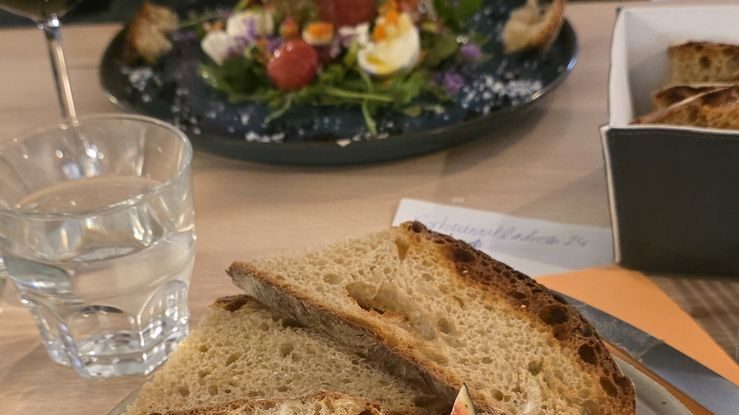
The foie gras dôme mi-cuit and the salade périgourdine · L'Adresse · September 2025
From Jack
In confirmation
D.,
That is L'Adresse. The chalkboard on the cobblestones is theirs — Restaurant L'Adresse Sarlat, on the Rue des Consuls in the old quarter. They have kept the same menu structure for years; the magret-foie gras-sarladaise plate has been on it the entire time. You were eating their food.
Here is what I propose for your wife's birthday.
Two magrets de canard from a Sud-Ouest duck — I source through a New York importer who brings in IGP-designated breasts from the same cooperative in the Landes that supplies most of Sarlat's restaurants. The breast scored, rendered slowly on the fat side until the skin shatters when you bite it, turned for a minute on the meat side, rested ten minutes, sliced on the bias just before the plate goes down.
The sauce foie gras built from duck stock I will make the day before — two days of bones, no shortcuts — reduced to a glaze with a bottle of Château du Cèdre Cahors, one of the few Cahors estates with U.S. distribution and very likely the wine your waiter wrote down on your placemat. The reduction finished off heat with a tablespoon of foie gras whisked in at the last moment so it enriches without breaking. The sauce poured under the sliced magret, not over it — that is the L'Adresse plating.
The pommes de terre grenaille façon sarladaise done properly: small Yukon Gold or French fingerling potatoes (the grenaille designation refers to the size, not the variety — I will choose by what is good at Kai-Kai Farm that week), halved skin-on, slow-cooked in duck fat I will render from the magrets themselves the day before. Tossed at the end with garlic and flat-leaf parsley, finished with fleur de sel. The duck fat is the entire dish; everything else is technique.
Three dollops of fresh sheep's-milk brebis on the plate — I will make a small cultured fresh cheese the morning of, since proper brebis frais does not ship.
Before the magret, the salade périgourdine for your wife — built exactly as you remember it, with smoked duck breast, gésiers confits I will preserve the week prior, a slice of terrine de foie gras mi-cuit made in my kitchen, and noix du Périgord through a small importer in Boston who brings them in seasonally. Late-October walnuts, this year's crop. The vinaigrette is walnut oil and a few drops of sherry vinegar, nothing more — the regional way.
The cheese course is one small Rocamadour AOP for the two of you, served at room temperature on a slate with a slice of toasted pain de campagne.
Dessert is where I have to be straight with you. The fraises du Périgord season is over by October, and the shipped fruit is not honest to the dish. What I propose instead, openly, is late-season Plant City strawberries from the Florida fields that come in October — small, deep red, very fragrant, as close to the Périgord aromatic profile as anything grown in this hemisphere. A few drops of vinaigre balsamique blanc and a spoonful of crème fraîche on the side. If you would rather wait until April, when the Périgord strawberry is in season and the actual French fruit can be airlifted, I would recommend doing this dinner then instead. The dish is honest only if the strawberry is right.
The wine: one bottle of the Château du Cèdre Cahors decanted an hour before service.
The total for the two of you, this menu, this wine, with the table set in your home, is [ price quoted privately ]. A test cook one week before, in your kitchen, of the magret and the sarladaise potatoes — the two things that have to be exactly right — at no additional charge.
One last thing. The wooden-beam room at L'Adresse is a small dining room toward the back with a stone wall on one side and a single hanging lamp at each table. If you would like, I will set your wife's table to match — a single white pillar candle, no flowers, a folded linen napkin under the bread plate, no music. The food is the event.
If this is the dinner you want, write back and I will send the contract.
Jack